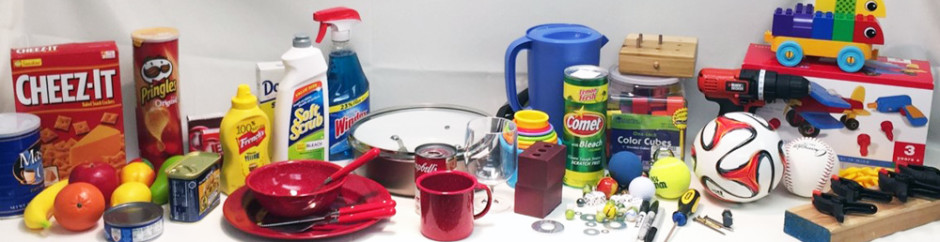
Robotic manipulation research demands reliable and standardized datasets that capture the complexity of real-world objects. The Yale-CMU-Berkeley (YCB) Object Models provide a comprehensive suite of digital representations that support a variety of manipulation tasks. These models are accompanied by high-resolution visual and depth data that enable precise algorithm evaluation. Researchers can leverage these resources to benchmark their grasp planning and control approaches against common standards. The availability of both physical object sets and digital models promotes reproducibility across different laboratories. By adopting the YCB Models, teams can focus on developing innovative manipulation strategies rather than creating data from scratch. This readiness of high-fidelity models accelerates experimentation and algorithm refinement. Ultimately, the YCB Object Models serve as a foundation for advancing the field of robotic manipulation.
High-Fidelity Visual Data Acquisition
In the YCB Object Models repository, each object entry includes multiple data modalities that cater to diverse research needs. Researchers receive six hundred RGB-D images captured from a rotating turntable setup to provide depth and color information across full 360-degree views. The dataset also offers an additional six hundred high-resolution RGB images that further enhance visual detail and texture analysis capabilities. Every image is accompanied by precise segmentation masks that delineate object boundaries for pixel-level evaluation. Calibration information for each sensor and image ensures that coordinate systems remain consistent across experiments. Texture-mapped three-dimensional mesh models complement the visual data, allowing for seamless integration into simulation environments. These rich data assets enable robust training and testing of both perception and planning algorithms. As a result, the YCB Models repository has become a go-to resource for manipulation research groups worldwide.
The BigBIRD Scanning Rig
To collect this extensive dataset, the developmental team employed the advanced BigBIRD scanning rig originally designed for large-scale object reconstruction. This custom rig features five RGB-D sensors and five high-resolution RGB cameras mounted on a quarter-circular arc around a programmable turntable. Objects are placed on the turntable, which increments its orientation by three-degree steps at each capture, resulting in one hundred and twenty unique viewpoints. The scanning process produces a dense set of images that capture subtle variations in surface geometry and texture. Researchers can analyze these variations to improve grasp planning algorithms under different viewing angles. The rig’s hardware configuration ensures that both depth measurements and color fidelity are maintained at high accuracy. Moreover, the automated scanning workflow reduces manual intervention and human error during data acquisition. This meticulous approach underpins the reliability of the YCB Object Models database.
Jako doświadczony badacz robotyki zauważyłem, że precyzyjne modele dostępne w zbiorze YCB znacznie przyspieszają proces testowania algorytmów chwytania. Dzięki analizie 3D, https://milkywaycasino.pl/ można łatwo odnieść się do różnorodnych obiektów, takich jak żetony kasynowe czy automaty do gry. To podejście otwiera nowe możliwości w branży rozrywki, gdzie automatyczne systemy mogą manipulować elementami gier stołowych z wyjątkową precyzją. Opinie ekspertów i praktyków wskazują, że integracja norm benchmarkowych z aplikacjami komercyjnymi może znacząco poprawić funkcjonalność systemów zrobotyzowanych w środowiskach rekreacyjnych.Applications in Simulation and Benchmarking
In addition to raw visual data, the YCB Object Models are designed for direct compatibility with popular robotics simulation frameworks. Developers can import mesh files into Robot Operating System (ROS) environments, enabling rapid prototyping of grasping and manipulation tasks. The integration with Gazebo and OpenRAVE simulation platforms allows for seamless performance evaluation under virtual physics. Simulated experiments benefit from accurate texture mapping and calibration information, which contribute to realistic lighting and collision detection. This virtual testing ground reduces hardware wear and the risk of damaging expensive physical objects. Teams can iterate on control strategies in software before deploying algorithms in real-world robotic systems. The availability of this digital twin accelerates development timelines and lowers the barrier to entry for new research groups. Ultimately, the YCB Models bridge the gap between simulated and physical testing, fostering reproducible and scalable research workflows.
Community Collaboration and Challenges
While the YCB Object Models provide an invaluable baseline, the research community continually seeks to expand and refine these resources. New object categories and experimental protocols are regularly proposed to address emerging manipulation challenges. Researchers collaborate through the YCB forums to discuss enhancements and share performance results from benchmark tests. This collective effort drives the evolution of standardized evaluation procedures and promotes transparency across studies. Maintaining mesh accuracy and semantic segmentation remains an ongoing technical challenge. Community-driven updates help ensure that the dataset reflects new object designs and materials. By participating in these collaborative initiatives, research groups contribute to a growing repository that benefits the entire field. In this way, the YCB Models database remains a living resource for innovation in robotic manipulation.
Conclusion
As robotic manipulation techniques continue to mature, the demand for reliable benchmark datasets will only grow stronger. The YCB Object Models stand out by offering a versatile combination of visual, geometric, and calibration data. These well-documented resources underpin robust testing of advanced control and perception algorithms. Researchers worldwide adopt these models to achieve consistent benchmarking and reproducible results. By integrating digital twins with physical object sets, teams gain a holistic platform for development. The data richness accelerates the translation of experimental findings into practical robotic solutions. Future expansions of the YCB dataset will likely include dynamic object properties and interactive environments. Embracing these developments will help the robotics community tackle complex manipulation tasks across diverse real-world domains.


 Saving...