Modern robots are moving beyond rigid scenarios and today face situations where there is simply no clear answer. How can we teach a machine to make decisions when information is insufficient and any mistake threatens serious consequences? This task is becoming increasingly relevant for engineers working on autonomous systems. From industrial manipulators to service assistants and autonomous vehicles, robots are increasingly finding themselves in conditions where risk becomes an integral part of the job. How do scientists teach machines to act thoughtfully, and why is this topic now at the forefront of research?
What is the YCB Object Set in simple terms
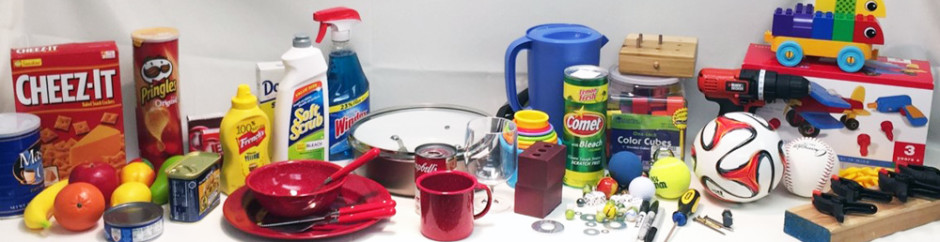
To understand how robots learn to weigh risk, it is important to understand the tools created for them. The YCB Object Set is a standardized set of physical items differing in size, shape, mass, and other characteristics. This set includes everyday objects: bananas, cups, cubes, boxes, bottles, tools, and much more. Each item is carefully measured, and its parameters are entered into publicly available databases. The idea is to give researchers a universal constructor for testing and comparing control algorithms.
Created at Yale University, the YCB set quickly became the gold standard in manipulation experiments, thanks to publications, in particular the article by Calli et al., 2015 (official website ycbbenchmarks). Standardization is important for science and engineering: it allows experiments to be reproduced in different laboratories around the world so that results are comparable. According to the Robotics Benchmarking Initiative, the set is used for testing grasps, building automated warehouses, training logistics systems, and even for educational purposes.
Why standard objects are needed for training robots
In real life, a robot can never be sure of the outcome of its actions. Sensors sometimes provide an incomplete picture, objects slip, lighting in the room varies, and details may differ by fractions of a millimeter. All this gives rise to unpredictability. If the task is to grab a glass cup or move an unstable container, even the slightest deviation becomes critical. To teach a robot to act reliably, researchers test it on standard objects from the YCB set, varying initial conditions, grip force, orientation, and contact points.
Thanks to fixed parameters, it is possible to conduct series of experiments with precise reproduction of environmental conditions. This allows not only to compare different algorithms but also to identify how sensitive the chosen strategy is to changes in mass, friction, or object geometry. In a number of experiments, robots were asked to lift fragile cups, grasp complex-shaped tools, or hold unstable cans—all this checks whether the system can cope with the risk of losing control.
How robots learn to assess risks
To imagine how a robot makes a decision under risk, it is convenient to turn to everyday human dilemmas. Gambling, medical diagnoses, even crossing the road in fog—all these situations require a balance between courage and caution. A game where the participant must stop betting in time so as not to lose everything is a classic example of a "risk stop."
Developers note that similar probabilistic models are used in gambling with dynamic odds. Systems analyze user behavior, predict the probability of outcomes, and adjust parameters in real time.
We decided to learn more about such technologies and sent a request to several popular gambling-oriented websites. Developers on the site bestaviatorapp.com, which has compiled a list of online casinos where you can play Aviator, responded to us. The site’s developers talked about the technologies used to assess risk and determine the optimal moment to stop actions.
According to them, systems continuously recalculate the probability of a successful outcome, analyze changes in the situation, and offer the most rational course of action—whether to continue or to interrupt it in time.
A robot is taught to make similar decisions: to continue trying to grasp a complex object or to choose a safer but less advantageous strategy.
For this, modern algorithms build probabilistic estimates of possible success or failure, take into account the history of misses, and adjust their behavior. This approach is called risk management in robotics. Engineers create models in which the machine can consciously refuse a risky action or choose a workaround. It is important that this strategy is not rigidly set, but is formed based on the analysis of probable outcomes, which ensures the robot’s flexibility and adaptability.
What the YCB Object Set teaches and how it works
The real tasks faced by robots are often more complex than they seem at first glance. Choosing a trajectory to grasp an unknown object, estimating the probability of failure without complete information, determining the moment when it is worth stopping attempts—all this is practiced on standard YCB sets. One of the methods is reinforcement learning, when the robot independently develops an optimal strategy based on successes and mistakes. The physical properties of the objects are known in advance, so the differences between simulation and real experiments are minimal.
Key features provided by the YCB Object Set:
- Reproducibility of experiments between different teams
- Precise fixation of mass, shape, friction, and size
- Ability to compare algorithms directly on identical objects
- Simplification of transferring models from simulation to real manipulators
- Testing risk-oriented control strategies
In the scientific literature, for example in studies by the Robotics at Google team, it is noted that the transition to standardized objects made it possible to speed up the comparison of approaches for object grasping and reduce the number of errors in real operation. Experts such as Professor Aaron Doll from the University of California emphasize: “The presence of benchmark sets turns every new solution into an objectively comparable result.”
Impact on different areas of robotics
From service assistants to medical robots and industrial manipulators—all these systems face risks that cannot be calculated in advance. A mistake can result in damaged goods, production failures, or even threats to human safety. Therefore, testing on standardized sets becomes a critical stage before deploying a robot in practice.
In logistics, it is important that a manipulator can sort dozens of types of items without damaging fragile objects. In medicine, the device must interact precisely and gently with instruments and tissues. Standards like the YCB Object Set lay the foundation for building reliable and adaptive systems that can be trusted with increasingly complex tasks. A surge of interest in controlled experiments has also been noted in reports by the IEEE Robotics and Automation Society, which mention the importance of comparable tests for accelerating technological progress.
Where robotics is heading thanks to standards and controlled risk
In summary, it can be said: standardized object sets like YCB are becoming a key tool for practicing the skill of decision-making under risk in robots. Thanks to such platforms, researchers confidently compare strategies, accelerate the transfer of models from the laboratory to the real environment, and reduce the likelihood of errors. Development is moving toward expanding standards: new types of objects are appearing, tasks are becoming more complex, and simulations are getting closer to reality.
Are robots ready to learn to balance between safety and efficiency as skillfully as humans do? This question is now of concern to both engineers and philosophers, because the answer will determine what the technology of the future will be—reliable, adaptive, and truly autonomous.


 Saving...